EN
EN  FI
FI 
LIMITED QUANTITIES, BE HURRY – HEAT PUMPS AT DISCOUNT PRICES!
LIMITED QUANTITIES, BE HURRY – HEAT PUMPS AT DISCOUNT PRICES!
Solar energy has gained unprecedented popularity in Finland in recent years. Companies, housing companies and homeowners alike are looking for ways to reduce their electricity bills and switch to more sustainable energy solutions. Solar panel technology has improved, prices have dropped and interest has grown even more – so now is the right time to find out if solar power would be a profitable investment for you too.
Last year, a record number of solar panels were installed in Finland, due to technological developments and falling prices. Solar panel prices are currently exceptionally low; for example, in 2024, a solar power system for a single-family home could be purchased for an average of 7,000–8,000 euros (turnkey, including VAT). At the same time, developments in panel technology have increased power output – solar panels now produce up to 50% more watts than before – and the price level has dropped by about 40 % in a few years. The economic attractiveness of the investment has therefore improved considerably, as small-scale electricity production can offset rising energy costs in an environmentally friendly way.
Current considerations:
• New subsidies & tax deductions: household deduction of 35 % for the work share. Renewable energy investment support for companies typically ~15 % (up to 20 % in regions), to be applied for before the project starts.
• Electricity price in 2025: on average more moderate than in 2022–2023, but peaks due to weather/transmission factors possible → self-consumption rate will be emphasized.
• Panel technology: n-type TOPCon is mainstream (good efficiency, low degradation), HJT is breaking records in the premium class; perovskite tandems are approaching commercialization.
• Inverters: three-phase hybrid inverters (battery backup) are rapidly becoming more common, especially in B2B/C&I projects to maximize self-consumption.
Microinverters:
East–west installation:
Investing in solar power offers many benefits. Here are five key reasons why purchasing solar panels is a profitable solution for more and more people:
B2B perspective: in companies, consumption is focused on the day → solar production is directly used. This increases the self-consumption rate, speeds up repayment and protects against price fluctuations. In housing companies, credit accounting/energy communities distribute the benefits to residents transparently.
System price? The price of a solar panel system consists of the panels themselves, an inverter, mounting accessories, installation work and design. The total price of a typical single-family house solar power package (approximately 5 kWp) is currently in the range of €5,000–8,000 for a turnkey delivery. The price range varies depending on the size of the system, the quality of the equipment, the characteristics of the installation site and the supplier. With this investment, approximately 4,000–4,500 kWh of electricity can be produced per year in Finland in a shaded location with the 5 kW system in question. The price per production output has fallen in recent years to clearly below €1.5/W_p when installed, so you can now get more power for the same money than ever before. When it comes to total costs, it is good to remember that the final price for households includes VAT, while companies can deduct VAT in their own taxation. In larger business locations, the calculated production output per € has decreased by as much as 20% over the last five years.
• Basic solution (TOPCon): ~1.0–1.2 €/Wp** (residence & light C&I)
• Premium (HJT): ~1.3–1.5 €/Wp** (limited roof area, best efficiency)
• Budget/volume (large projects): ~0.8–1.0 €/Wp** (50–500 kWp+, series installations)
Repayment period? Investing in solar panels has become more financially profitable, as the payback periods for the panels have shortened. As stated above, the purchase of a solar panel system for a detached house typically pays for itself in about 7–11 years, when the saved electricity costs and any income from the sale of surplus electricity are taken into account. For companies, the payback period is often even shorter, if the electricity produced is fully utilized during the day. Solar electricity has also become more profitable for housing companies: thanks to a change in the law (2021), the housing company can distribute the output of a solar power plant to the apartments without separate transmission fees, which means that up to 10–25 % of the housing company's annual electricity needs can be covered with solar electricity. At best, a housing company's investment in solar panels can pay for itself in about eight years, when the benefits are shared among the shareholders. Payback: household ~7–11 years; business 5–9 years, when production goes directly to daily consumption.
Regional yield (kWh/kWp/year)
• Helsinki & Uusimaa: ~880–900** (e.g. Hki ~890)
• Tampere & Pirkanmaa: ~820–870
• Turku & Southwest Finland: ~850–900
• Jyväskylä & Central Finland: ~780–850
• Oulu & Northern Ostrobothnia: ~750–830
• Lapland: ~700–800** (long daylight season, lower radiation in winter)
Subsidies and tax benefits? Public subsidies are also available to promote solar energy, which further improve the profitability of the project. Individuals can take advantage of a household deduction that will reimburse 35 % of the costs of installing solar panels from the beginning of 2025. The maximum household deduction is €1,600 per person per year, so a couple can receive a total of up to €3,200 in tax benefits for the work part. For companies and communities Business Finland energy support is available: in 2025, investment support for renewable energy projects (such as solar power plants) is typically 15 % of the project costs. The support is a grant that does not have to be repaid, and it accelerates the payback of the company's solar power investment. (It should be noted that energy support is only granted for projects that exceed the €30,000 limit, and BF support is not granted directly to housing companies.) Housing company Partners can use the household deduction for their share of the costs of work in a joint solar project, and some municipalities also offer local subsidies for housing associations' solar energy projects. By familiarizing yourself with the different forms of support and utilizing tax deductions, you should ensure that you get the best possible return on your solar panel investment.
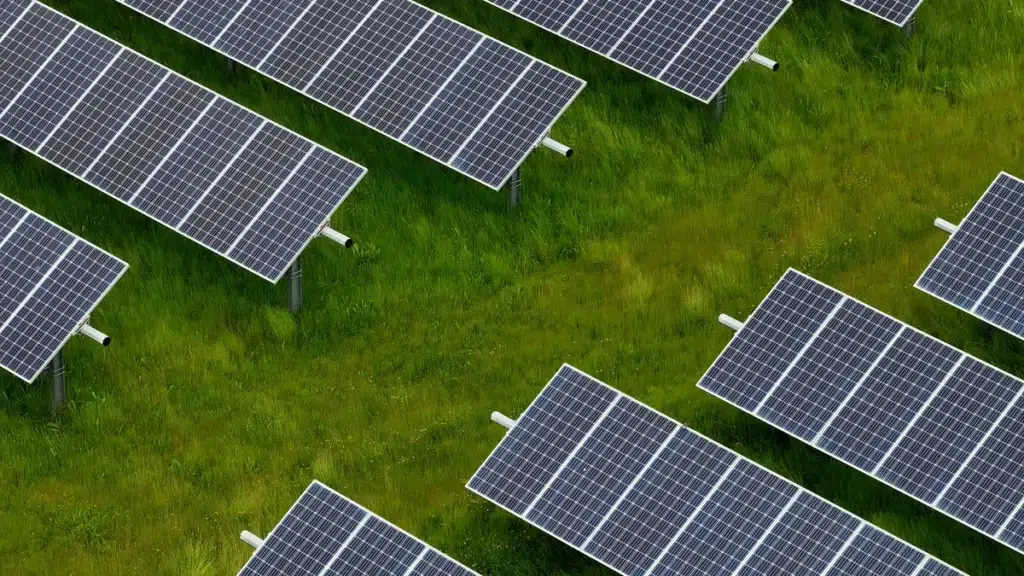
Purchasing a solar power system turnkey -principle has a hassle-free process when experienced professionals are involved. In general, the project progresses as follows:
Online store product range of solar panels.
Summary recommendation: n-type TOPCon is a safe basic choice (best price-performance ratio), HJT when roof area is limited and efficiency is critical, microinverters for shaded/shaped sites, and a hybrid inverter with battery readiness if the goal is a high self-consumption rate and peak cutting.
The solar energy transition is now at an economically and technically optimal stage, the technology and market situation create a unique opportunity that is worth taking advantage of. Our experts will analyze the potential of your property, design the optimal solution and implement the project on a turnkey basis. Request a free preliminary survey:
Online form: Contact form Phone: 010 660 3030 E-mail: info@renewe.fi
“We make the solar energy transition easy and profitable – join the pioneers of sustainable energy.”
A company's 50–100 kWp system typically costs 40,000–80,000 euros when installed. With a possible Business Finland 15 % subsidy, the net investment is 33,250–70,750 euros. The payback period is on average 5–9 years, depending on the degree of self-use. Leasing offers practically cash-free investment.
There is no single right answer: the choice is made according to the roof, the shadows, the budget and the goals. n-type TOPCon is basic, HJT gives the best efficiency in a limited area.
Yes, it is worth it. Installation can be done all year round, and early winter is often the optimal time – the system is ready to produce maximum benefit in the summer season. In addition, winter installations often have better availability and shorter delivery times.
Modern N-type panels also produce electricity in diffuse light, although the output is 10–25 % below the level of a bright day. On an annual basis, cloudiness is already taken into account in regional yield estimates.
The need for maintenance is minimal. An annual inspection and possible spring cleaning are sufficient. Panel manufacturers provide a 25–30 year power output guarantee, while inverters typically have a 10–15 year guarantee.
Yes. Battery systems have developed significantly and prices have fallen. A typical 100 kWh commercial battery pack with accessories costs an average of 40,000–50,000 euros when installed. The self-use rate can reach up to 90 percent.
Sources: Renewe, Tax Administration, Business Finland, Nord Pool, Motiva, HSY Climate Info