EN
EN  FI
FI 
LIMITED QUANTITIES, BE HURRY – HEAT PUMPS AT DISCOUNT PRICES!
LIMITED QUANTITIES, BE HURRY – HEAT PUMPS AT DISCOUNT PRICES!
Comprehensive in our guide to solar energy we laid the foundation for why the role of self-generation has grown exponentially in Finland. In this article, we take a step deeper and look at the generation unit itself: solar power plantIt's not just about panels mounted on a roof or wall, but a complete, intelligent system designed to produce clean energy and financial savings for decades.
This article is for those of you who are considering investing in your own energy production – whether you are a homeowner, a housing association board member or a business decision-maker. We will go over how to design a solar power plant, what different types of power plants exist and how energy storage can take the benefits of the system to a whole new level.
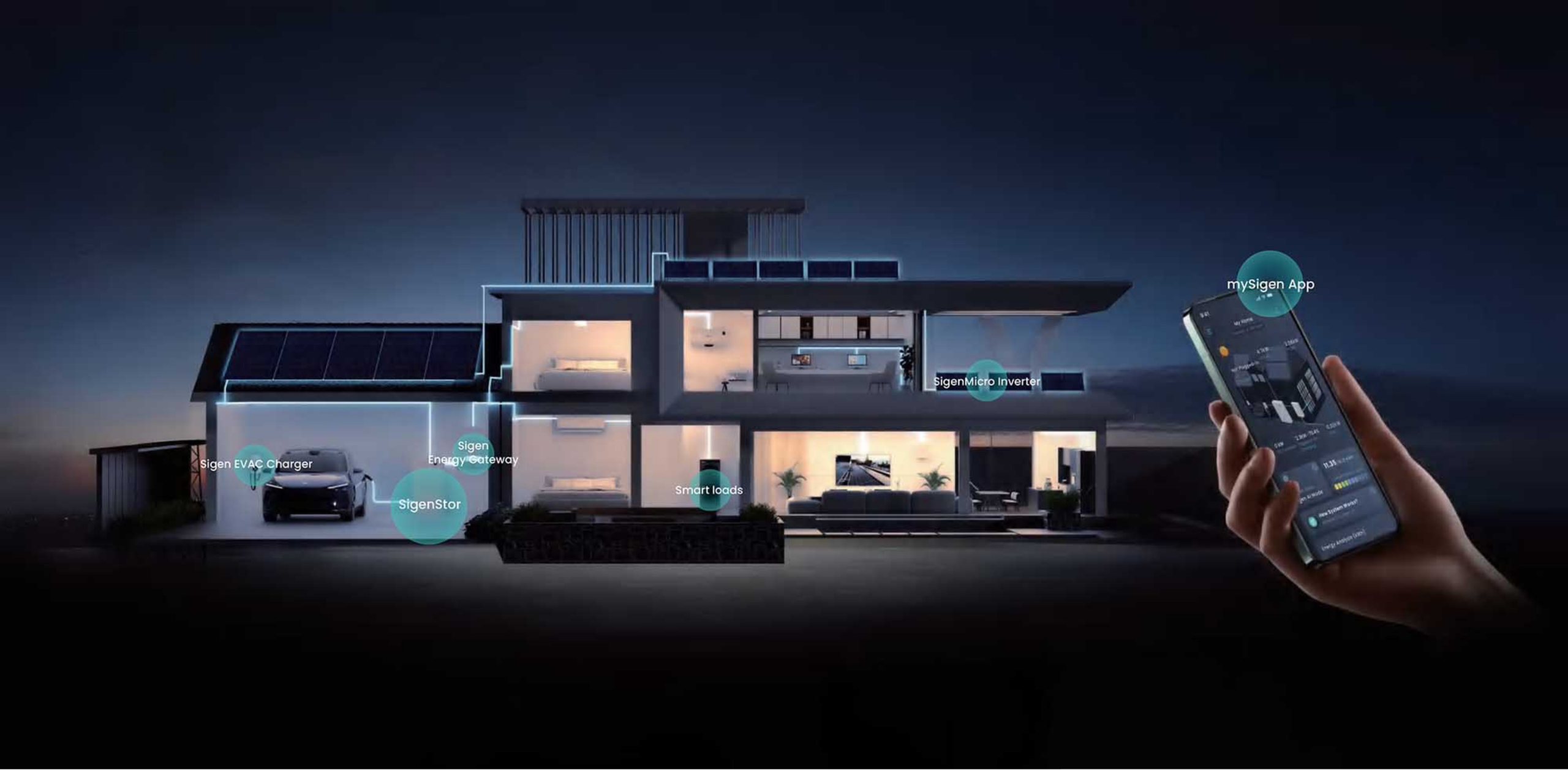
It is important to understand that a solar power plant is not just a set of solar panels. It is a carefully designed and integrated system, each part of which is critical for efficient and safe operation. In addition to the panels, the system always includes inverters, which convert the generated direct current into alternating current for your home and the grid, as well as professionally implemented installation systems and electrical work. A modern power plant also includes a smart monitoring system that allows you to monitor energy production in real time, even from your own phone. Think of it as an independent, property-increasing energy production plant, tailored to your needs.
Expert perspective: The technical content and analysis of this article is provided by Renewe's Chief Energy Officer, Ville Nieminen, who has been involved in several major corporate and residential solar power projects over the past decade.
Traditionally solar power plants are used to seeing on roofs, but modern installation technology has brought new, flexible options. Choosing the right location is the first step in successful design.
Rooftop power plant is by far the most common solution in all types of properties. It makes efficient use of existing, otherwise unused surface area. The extensive roofs of large commercial properties and industrial halls are particularly ideal, but the roof of a detached house or housing company also provides an excellent platform for a significant power plant. However, the design must always ensure the condition and structural load-bearing capacity of the roof so that the system can be installed safely to serve its entire life cycle.
Wall-mounted power plant is a growing trend and an architecturally elegant solution. Panels installed on a south-facing wall surface are an excellent option if the shape or material of the roof limits the installation. A particular advantage of wall installation in Finnish conditions is its yield profile. When the sun shines low in the spring and autumn, a more vertical installation angle collects energy efficiently. In winter, the wall panels are not covered by snow, so they can utilize even the little light on winter days and generate electricity when the roof panels are covered with snow.
Land power plant is a large-scale solution, best suited to sites with available vacant land, such as farms or industrial properties. When installed on the ground, the orientation and tilt angle of the panels can be perfectly optimized to achieve maximum annual production, without the constraints imposed by the roof.
The biggest challenge with a solar power plant is that it produces the most electricity during the day, when household consumption is often at its lowest. Without storage, this surplus electricity is often sold to the grid at a fairly low price, and the electricity needed in the evening has to be bought back at a higher price.
An effective solution to this challenge now is: energy storage.
An energy storage system, or battery system, is a smart system that charges itself with excess electricity produced during the day. When the sun sets in the evening and the home or property's electricity consumption increases, the system automatically starts to discharge the free solar electricity stored in the battery for use by the property.
Once the solar power plant and energy storage are integrated, the system is ready to serve other energy-intensive functions of the property. You can run your own solar power cost-effectively heat pump for cooling or heating and charging at charging stations electric cars for residents or employees practically free of charge. This is true, intelligent energy management, where all parts support each other.
This completely revolutionizes the benefits of a solar power plant. With energy storage, you can increase the self-consumption rate of solar electricity to almost 100 percent. This means that almost every kilowatt-hour generated by the panels is utilized by yourself, which dramatically reduces your dependence on purchased electricity and speeds up the payback period of your investment. In addition, energy storage acts as your backup during short power outages, maintaining power to the most important devices in your property. It is the final touch that makes a solar power plant a complete energy system.
Purchasing a solar power plant is an economically viable investment. In detached houses, you can take advantage of the household deduction for the installation work. Companies, on the other hand, are offered Energy support granted by Business Finland, which covers part of the investment costs and makes the project even more attractive.
More important than profitability, however, is understanding the long-term value of the investment. Your own solar power plant is a concrete step towards energy self-sufficiency. It protects you from fluctuations in electricity prices, reduces your carbon footprint and increases the value of your property. It is an investment that will provide clean energy and peace of mind for decades to come.
Case example: Espoon Liikekeskus Oy – 240 kWp rooftop power plant + 120 kWh storage – Investment: €175,000 – Annual savings: €26,000 – Payback: 6.7 years.
For companies, a solar power plant is a strategic competitive advantage, such as: improved ESG reporting, predictability of energy costs, Green Building certification points, and an “act of responsibility” appreciated by customers.
Investing in a solar power plant is a strategic decision that reduces costs and strengthens your independence from the energy market. Renewe experts are ready to help you at every stage of the project. Book a free survey – we will design a solar power plant that suits your site and provide a clear cost and return estimate.
🔗 Start with a free survey • 📞 010 660 3030 • 📧 info@renewe.fi
What is the optimal size of a solar power plant for our company? The optimal size depends on the consumption profile of the property. The primary goal is to size the power plant so that as much of the electricity produced as possible can be utilized by the property itself. Oversizing is not economically viable if a large part of the production has to be sold to the grid at a low spot price.
How does the compensation calculation procedure work in a housing company's solar power plant? With the help of a rebate calculation, the electricity produced by the housing company's power plant can be distributed to the benefit of the shareholders. Surplus electricity that is not consumed in the common areas of the property is refunded to the shareholders' own electricity bills, making the investment profitable for all shareholders.
What is the life cycle of a solar power plant and how is it maintained? Modern solar panels The power output guarantee is typically 25–30 years, and the technical life cycle of the entire power plant is even longer. The system is almost maintenance-free. Regular monitoring and periodic inspections ensure its proper operation.
How does a solar power plant affect the value of a property? A solar power plant increases the value of a property by an average of 3-5%. The energy certificate improves significantly, which is increasingly important in purchasing decisions. In commercial properties, the impact is even greater: a property that meets ESG criteria is more attractive to tenants and investors.
How long does it take to install a solar power plant? A 5-20 kWp system for a single-family home is typically installed in 1-3 days. Larger 50-250 kWp power plants for companies are installed in 3-9 days. The entire project, including permits and implementation, usually takes 2-6 weeks from order to commissioning.