EN
EN  FI
FI 
LIMITED QUANTITIES, BE HURRY – HEAT PUMPS AT DISCOUNT PRICES!
LIMITED QUANTITIES, BE HURRY – HEAT PUMPS AT DISCOUNT PRICES!
In previous sections, we have discussed how solar energy produced efficiently and how inverters intelligently transform it for our use. Now we're dealing with the final piece that ties it all together and unlocks the full potential of a solar power plant: energy storage. A battery, as it's also called, is not just a battery; it's a dynamic tool that changes the way we use and manage energy, giving you the power to decide when to use your self-generated or cheaply purchased energy.
Solar panels are designed to produce electricity when the sun is shining – typically in the middle of the day. However, in many homes and even businesses, electricity consumption is highest in the morning and evening. Without storage, valuable surplus energy generated during the day is often sold to the grid at a low spot price, only to be bought back at a higher price a few hours later.
Energy storage solves this fundamental challenge. It is an intelligent system that stores the free solar energy produced during the day and makes it available to you exactly when you need it most.
Expert perspective: This article was written by Mika Aaltonen, Renewe's Chief Energy Officer. His area of expertise is the seamless integration of modern energy systems, especially solar power plants and energy storage, into smart energy management for buildings.
The principle of energy storage is ingeniously simple. When your solar panels produce more electricity than your property currently consumes, the smart control system does not feed the surplus into the grid, but directs it to charge the battery. When the sun sets and your electricity consumption exceeds the panels' instantaneous production, the system automatically starts to discharge the energy stored in the battery for use by your property.
The end result of this process is revolutionary: solar energy self-utilization rate increases dramatically. While without a battery, up to half of the production can be sold, with energy storage you can use up to 80-90 % of the solar electricity you produce yourself. This means maximum savings on your electricity bill, as every kilowatt-hour you use yourself reduces the need to buy expensive electricity from the grid. It makes you truly significantly independent of the pricing of electricity companies.
Energy storage is worth it when you want to increase your own use of solar electricity, balance evening and morning peaks, prepare for power outages or take advantage of price differences in electricity exchanges. Typical sizes for households are 5–15 kWh, for companies, from tens to hundreds of kWh depending on the site. You get the best benefit when the sizing is based on the consumption profile and not just the panel output.
A modern energy storage system is much more than just a piggy bank for solar energy. It is a versatile energy management tool.
One of its most valued features is its ability to act as a backup power source. In the event of a power outage, a properly installed energy storage system can automatically disconnect from the power grid and start supplying power to the most important electrical appliances in a home or business. This ensures that, for example, lighting, a refrigerator, a heating system circulation pump and an internet connection remain operational even in the event of a disruption. It is a tangible addition to the security and safety of a property.
In addition, energy storage opens the door for the intelligent use of exchange-traded electricity. A smart system can be programmed to track spot electricity prices. It can charge itself up not only with free solar energy, but also with grid electricity when the price is lowest – typically at night. This cheaply stored electricity can then be used during expensive peak consumption periods, bringing additional savings, especially for users of exchange-based electricity contracts.
The real intelligence of energy storage is revealed in the winter months, when solar production is low. A system that uses exchange-traded electricity does not remain idle, but becomes an active tool for reducing your electricity bill: Intelligent control fully charges the battery with cheap night-time electricity (e.g. 02-04), when the price can be close to zero. Discharge in the morning: When the need for electricity begins and electricity consumption and the exchange price are at their highest (e.g. 07-09), the system discharges the electricity stored during the cheap night from the battery. This effectively cuts the most expensive consumption hours off your electricity bill. This makes energy storage a profitable investment every day of the year, not just in summer. It is also the perfect partner for heat pumps, who benefit the most from avoiding expensive morning operating hours.
For companies, energy storage is a strategic investment that goes beyond mere savings. In industrial properties, it smooths out peak loads, reducing basic charges by up to 30-50%. In office properties, batteries enable critical systems to operate during power outages, securing server rooms and production systems. In ESG reporting, energy storage increases the self-consumption rate of renewable energy to almost one hundred percent, significantly improving the responsibility profile. In addition, you earn money by participating in balancing the electricity grid, thousands of euros for larger systems.
In housing associations, energy storage enables the equal distribution of solar electricity to all shareholders in a compensation calculation procedure. The electricity consumption of common areas, such as elevators and lighting, can be covered almost entirely by own production. In addition accumulator battery acts as a backup during power outages, keeping stairwell lighting and door automation operating.
The same principles apply at home, energy storage + exchange-traded electricity contract = double savings. The system automatically charges the batteries, e.g. when the spot price is below 3 cents/kWh (typically at night between 01 and 05). Using stored electricity during expensive hours (15-25 cents/kWh) saves an average of 5-10 cents/kWh. Your energy storage can earn money by participating in balancing the electricity grid. Fingrid and the electricity companies pay compensation for frequency regulation and power balance. In current projects, households earn €300-600/year by partially sharing their batteries with the grid. Full commercialization is expected in 2026-2027.
Modern energy storage systems are mainly based on lithium-ion technology. The most common and safest cell type in household and commercial use is lithium iron phosphate (LFP).)Unlike previous lithium battery technologies, LFP batteries are highly thermally stable and do not contain controversial cobalt. They can withstand a very high number of charge cycles without significant loss of capacity, ensuring a long technical lifespan of up to 20 years.
However, it is important to remember that energy storage is a high-power electrical device. Its installation should only be carried out by a certified electrical professional. A properly installed, CE-marked system from a quality manufacturer is a very safe and reliable part of energy management in your home or business.
Power vs. energy: kW and kWh in plain language. Capacity (kWh) tells you how much energy can be stored. Power (kW) tells you how quickly it can be charged or discharged. Both determine everyday utility: a large kWh without sufficient kW power cannot cover power peaks; conversely, a large kW without sufficient kWh capacity will run out too quickly.
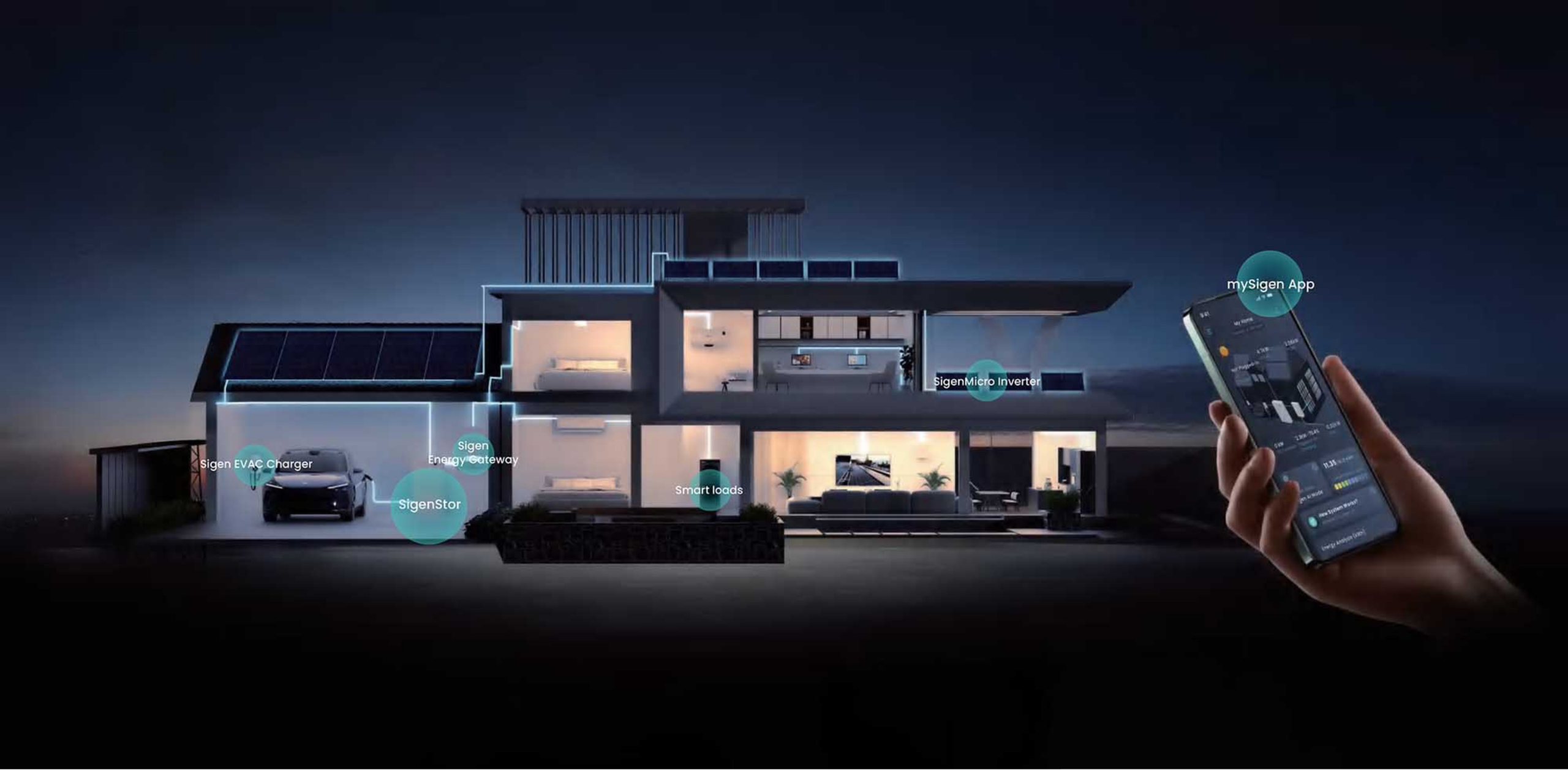
We are on our way to a future where the electric car is no longer just a means of transportation, but an active part of your property's energy system. This revolution is based on Vehicle-to-Grid (V2G) technology, which enables electricity to flow in two directions: from the grid to the car and from the car back to the home or even for sale to the national grid. Imagine that your car, which is unused for an average of 90% of the time, acts as a huge energy storage on wheels. It can guarantee electricity supply during power outages (Vehicle-to-Home), store cheap exchange-traded electricity at night for use during expensive hours of the day and in the future even earn you money by participating in balancing the electricity grid. The key players are charging stations, which support bidirectional charging, will make the vehicle battery a smart, economical and resilient resource. Preparing for this future is surprisingly simple and starts with making the right equipment choices today.
If solar panels are the first step towards energy self-sufficiency, energy storage is the second and crucial step. It transforms a solar power plant from a static production facility into a dynamic system that not only produces energy, but also stores and manages it intelligently. It maximizes the financial return on your investment, improves the security of supply of your property and gives you the tools to navigate the opportunities of the modern energy market.
Energy storage is a smart addition to a solar power plant: it moves production to where consumption is, cuts power peaks, improves backup and allows you to take advantage of price differences in electricity markets. When dimensioned, controlled and installed correctly, you get a smoother energy budget and better benefit from every kilowatt-hour produced by the panels.
Don't just produce solar energy – use it for your own use when you need it. Our experts will calculate for you, free of charge, how much of your purchased electricity you can replace with energy storage and how quickly your investment will pay for itself.
Request a free savings analysis and sizing.
📧 info@renewe.fi 📞 010 660 3030
What size energy storage do I need? The correct battery size depends on both solar power plantsi efficiency and your property's consumption profile. A general rule of thumb is that the battery capacity (kWh) is approximately 1–2 times the power of the solar panels (kWp). For example, a 10 kWp power plant is well matched with a 10–20 kWh battery. Excessive oversizing is not profitable. Our experts will always help you size a package that suits your needs and maximizes your return without unnecessary costs.
How long does the energy storage last? The technical lifespan of a high-quality LFP energy storage device is very long. Manufacturers typically guarantee a certain number of charge cycles or years of use for the batteries. Often the warranty covers 6,000–10,000 full charge-discharge cycles, which in practice means up to 20 years of carefree use. Even after this, the battery does not stop working, but its capacity slowly begins to decrease, just like a mobile phone battery.
Will the property work during a power outage if I have a battery system? This depends on how the system is installed. Typically, the backup power function is designed to power only the most critical electrical appliances in the property, such as lighting, refrigerator, freezer and heating system. Powering the entire property, including high-power appliances such as an electric heater, would require a very large and expensive battery pack. The system is therefore always tailored to protect the functions that are most important to you during a power outage.
Does battery capacity decrease in cold weather?? Cold reduces instantaneous power and capacity. Place the battery in a location where the temperature remains within the manufacturer's recommended range, or use models with a heating function.