EN
EN  FI
FI 
LIMITED QUANTITIES, BE HURRY – HEAT PUMPS AT DISCOUNT PRICES!
LIMITED QUANTITIES, BE HURRY – HEAT PUMPS AT DISCOUNT PRICES!
Cooling has changed from an occasional comfort factor to a critical part of a property's building services in Finnish conditions. Changing climate conditions, increasing urban construction and the high internal heat loads of modern buildings (IT equipment, lighting, people) place new demands on the management of indoor conditions.
An efficient and properly sized cooling system is no longer just a cost, but a strategic investment that directly affects business continuity, employee productivity, process reliability, and property value.
This guide is designed to provide a technical yet understandable overview of modern cooling systems. We will cover the different cooling devicetechnologies, their operating principles and suitability, and we help you understand the factors that are key to successful system selection and energy-efficient operation.
Expert perspective: This guide was written by Renewe Project Manager Ville Nieminen, who has over 15 years of experience in designing and implementing demanding cooling and air conditioning systems for data centers, commercial buildings, and industrial processes.
A functioning and well-designed cooling system produces direct economic and operational benefits:
The choice of a cooling solution is always based on a site-specific needs analysis, which examines, among other things, power requirements, thermal loads, intended use of the premises, expandability, and life cycle costs.
Water cooler is a centralized system that produces cold water. This water is circulated through pipes to the fan coils in the building or to the cooling coils of the ventilation units, which cool the room air.
Water-cooled The system operates completely without a visible outdoor unit, allowing cooling can be implemented invisibly, quietly and efficiently, also for small and residential projects.
VRF/VRV system is a distributed solution consisting of one or more outdoor units and several indoor units. The system adjusts the refrigerant flow steplessly according to demand, making it very energy efficient. VRF/VRV units can also support heating.
This category covers a wide range of solutions from individual split units to cooling coils integrated into the ventilation unit, with general power ratings of 1-1000kW.
Process cooling is a critical part of production in many industries, such as plastics, food, pharmaceuticals and metals. Unlike comfort cooling, in process cooling the requirements for temperature accuracy, stability and reliability are absolute.
The systems are always designed completely tailored to the process requirements, and they emphasize assured operation (redundancy), precise control and often also efficient utilization of heat recovery.
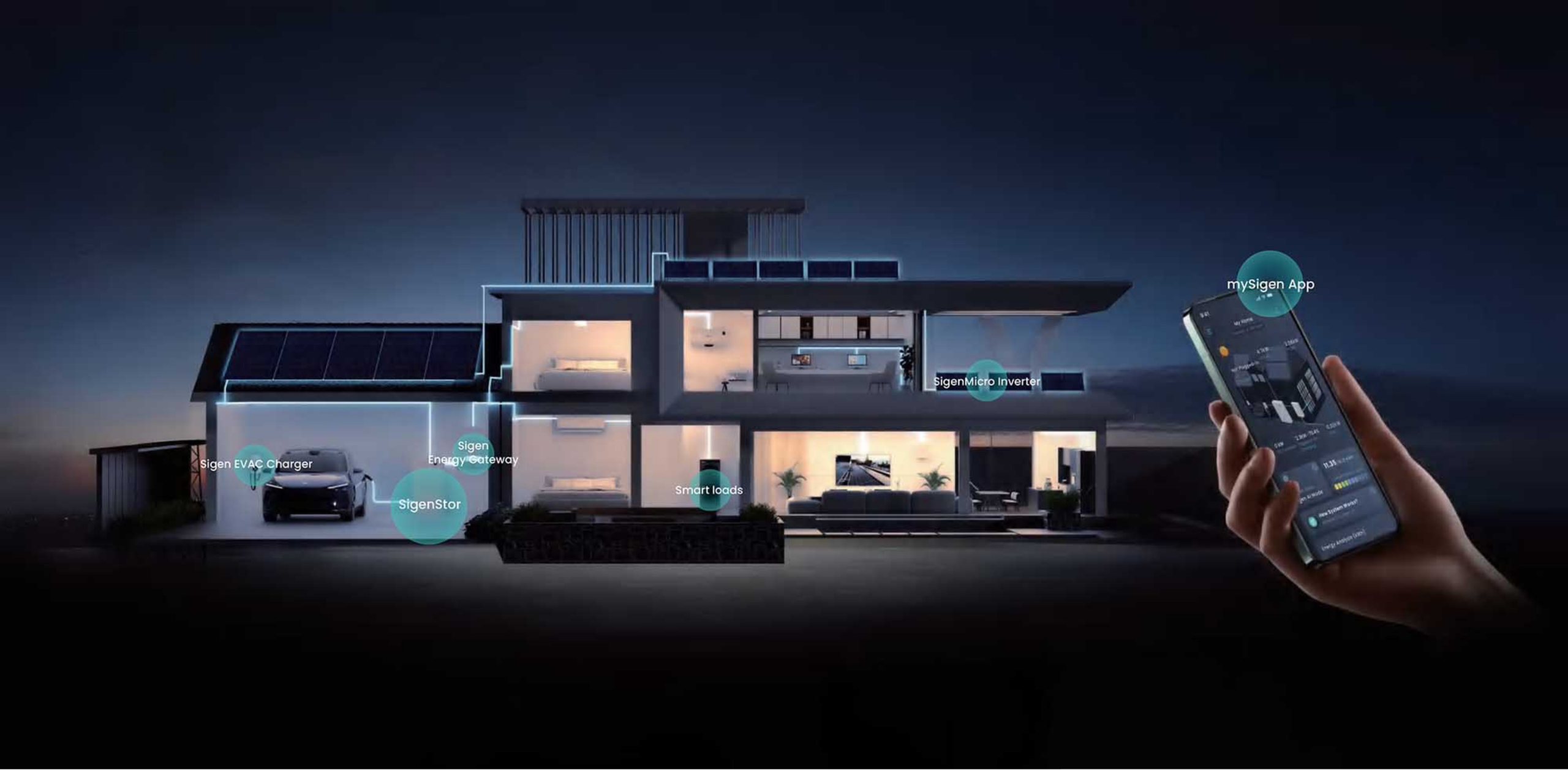
Energy solutions in a modern building are not isolated islands, but a smart whole. The true potential of the cooling system is unlocked when it is integrated into the building’s own renewable energy production. This not only reduces operating costs, but also makes your building a pioneer in the green transition.
The combination of cooling and solar power is a perfect match. The need for cooling is greatest when the sun is at its hottest – and at the same time the solar panels are producing the most electricity. This perfect timing creates several advantages:
Investing in solar power transforms cooling from an energy-consuming expense into a smart part of a property's energy self-sufficiency.
Geothermal energy is known as an efficient form of heating, but its hidden treasure is its ability to provide almost free cooling. This is called for free cooling, water coolers can also be equipped with free cooling.
The operating principle is ingeniously simple:
Free cooling is extremely energy efficient, and its operating costs are only a fraction of traditional cooling systems. As an added bonus, the thermal energy collected from the property “charges” the borehole during the summer, which improves the heating efficiency of the ground source heat pump the following winter. This makes geoenergy a comprehensive and year-round energy solution. For high cooling capacity needs, a water chiller with free cooling equipment can be used.
Two factors strongly guide the design of modern cooling systems:
Purchasing a cooling system is a significant investment, the success of which requires professional expertise and careful preparation.
A properly selected cooling system is an investment that pays for itself in improved productivity, reduced operating costs, and stable property value. ReneweOur experts will help you navigate the options and design the cooling package that best suits your needs.
Book a free survey: 010 660 3030 | info@renewe.fi | Fill out the form online
What is the difference between a VRF and VRV system? Technically, the systems are almost identical. VRV (Variable Refrigerant Volume) is a registered trademark of Daikin, while VRF (Variable Refrigerant Flow) is a generic term used by other manufacturers.
How often should the cooling system be serviced? The statutory maintenance interval depends on the amount and type of refrigerant in the system. However, regular preventive maintenance (at least once a year) is always recommended to maximize the system's reliability, energy efficiency and service life.
How is the capacity of the cooling system determined and what happens if the need increases in the future? The capacity is calculated using a heat load survey of the premises, which takes into account the number of people, IT equipment, lighting, sunlight and ventilation. The design usually allows for a growth margin of 5-15%. Modular systems such as VRF/VRV allow for easy expansion by adding indoor and outdoor units. In chiller systems, capacity can be increased by parallel connection. During the design phase, it is important to determine the adequacy of the electrical connection and the dimensioning of the piping for future needs. In professional design, these factors are taken into account from the very beginning.
Can the waste heat generated from cooling really be utilized? Yes, and it is highly recommended. For example, the condensation heat from a water chiller can be transferred through heat exchangers to the property's heating network, which significantly reduces the need for purchased energy during the heating season.
How are the operating costs of a cooling system distributed and how can they be optimized? The operating costs of a cooling system consist mainly of electricity (70-80%), regular maintenance (10-15%) and possible repairs (5-10%). Electricity costs can be optimized in several ways: by using cheap night-time electricity for pre-cooling, by utilizing free cooling when the outdoor temperature is low enough, and by adjusting indoor temperatures according to operating times. Waste heat recovery can reduce the total energy consumption of a property by up to 20-30%. Modern automation and remote monitoring enable continuous optimization and predictive maintenance, which extends the service life of the equipment and maintains efficiency.
What does the F-gas regulation mean in practice for my old equipment? This means that servicing older equipment using high GWP refrigerants (e.g. R404A) will become progressively more expensive and eventually impossible as the availability of the refrigerants decreases. It is advisable to plan for system renewal well in advance.