EN
EN  FI
FI 
LIMITED QUANTITIES, BE HURRY – HEAT PUMPS AT DISCOUNT PRICES!
LIMITED QUANTITIES, BE HURRY – HEAT PUMPS AT DISCOUNT PRICES!
The transformation of the energy market, rising costs and stricter emission requirements have driven property owners – companies, housing associations and households – to seek strategic and sustainable solutions for heating. Heat pump technology has become a key player in this development, offering a technically mature and economically very profitable alternative to traditional heating methods. Heat pump transfers heat from the environment to the interior – resulting in major savings, a smaller carbon footprint, cooling in the summer and better price certainty.
The purpose of this guide is to provide an in-depth and unbiased overview of modern heat pump solutions. We will not only present the different technologies, but also analyze their suitability for different property types and uses. Our goal is to provide you with the information you need to make an informed investment decision for the future of your property.
Expert perspective: The technical content of this guide is written by Mika Wettenhovi, Renewe's Chief Energy Officer. He has designed and supervised thousands of demanding heat pump systems for both industrial and residential properties for over 25 years.
The operating principle of a heat pump is fundamentally more efficient than that of traditional systems. Instead of generating heat through combustion or electrical resistance, it transfer existing thermal energy from the environment (earth, air, water) for use in the building. This process is significantly more energy efficient, which is directly reflected in three key areas:
Correct system sizing and technology selection are the cornerstones of a successful project, and this is where expertise comes into play.
Ground source heat pump utilizes the thermal energy stored in the ground, which is constant throughout the year. Geothermal energy is collected from a drilled energy well or a surface-mounted collection circuit.
Air-to-water heat pump takes energy from the outside air and transfers it to the property's water-circulating heating system (radiators/floor heating) and to the domestic water.
Air source heat pump transfers energy between the outside air and the inside air. It is not the main heating system of the property, but a support system.
Exhaust air heat pump recovers heat from the property's exhaust air and uses it to heat the supply air or domestic water.
In large buildings and industrial processes, the potential of heat pump technology is enormous. In this case, we are talking about significantly more efficient industrial heat pumps and hybrid systems that can be integrated into existing building services.
Key application areas include:
In large properties (housing companies, retail, logistics, production), heat pumps enable the combination of heating, cooling and waste heat recovery. At Renewe, we design complete systems: heat sources, storage tanks, cooling, controls and metering, so that savings become real (including SCOP/coefficient of performance).
A successful heat pump project is more than just a hardware purchase. It is a process that requires careful planning and life cycle thinking.
In profitability calculations In addition to the initial investment, future savings in energy costs, maintenance costs and possible forms of government support must be taken into account. An expert partner will always prepare a reliable, site-specific profitability analysis.
Key grants available in 2025 include:
To whom? Direct-electric houses, townhouses, cottages, offices.
Pros: Affordable, quick installation, effective cooling included.
Attention: Does not heat domestic water; best used alongside another heat source.
To whom? As a replacement for oil/gas/electric storage heaters, radiators or underfloor heating.
Pros: Heats the entire property and, if necessary, hot water; no drilling required.
Attention: In extreme cold, an electric heater can help – sized correctly.
To whom? New + larger renovations, housing companies, large properties.
Pros: Low operating costs, steady yield all year round.
Attention: Requires energy well or the largest initial investment in the district.
To whom? New, airtight properties with mechanical ventilation.
Pros: Combines ventilation and heat recovery, small space requirement.
Attention: Best for sites where LTO infrastructure is natural.
The repayment is typically 4–8 years, when the dimensioning, usage profile and electricity price are taken into account. The system life cycle is 15–25 years – savings accumulate over a long period of time.
There are many players on the market. Choosing the right partner is critical for the smooth operation and life cycle of the system, and special attention should also be paid to after-sales service. Also pay attention to the following:
Every property is different. The size of the plot, the current heating system and existing technology, and the need will affect which solution is most profitable.
Purchasing a heat pump is a strategic decision that requires expert planning. Take the first step towards an energy-efficient future. Renewe's experts are ready to help you find the most cost-effective solution for your property's needs.
Book a free survey: 010 660 3030 | info@renewe.fi | Fill out the form online
Does an air-to-water heat pump require the old radiator network to be replaced? Not necessarily. Although heat pumps work most efficiently in low-temperature systems (e.g. underfloor heating), they can often be sized to work efficiently with an existing radiator network or fan coil units. A survey by a professional will provide a definitive answer to this.
How does a heat pump affect a company's cash flow and financing? A heat pump investment improves a company's cash flow in two ways. First, it turns unpredictable, inflation-increasing heating costs (OPEX) into a predictable capital cost. Second, energy savings start from the very first month. For many companies, the improvement in cash flow can be so significant that the monthly savings even cover the financing repayments in full. In addition, the heat pump is tax deductible with a residual depreciation of 25% per year, which improves the tax allocation of the investment. We always offer a detailed cash flow analysis as part of the planning.
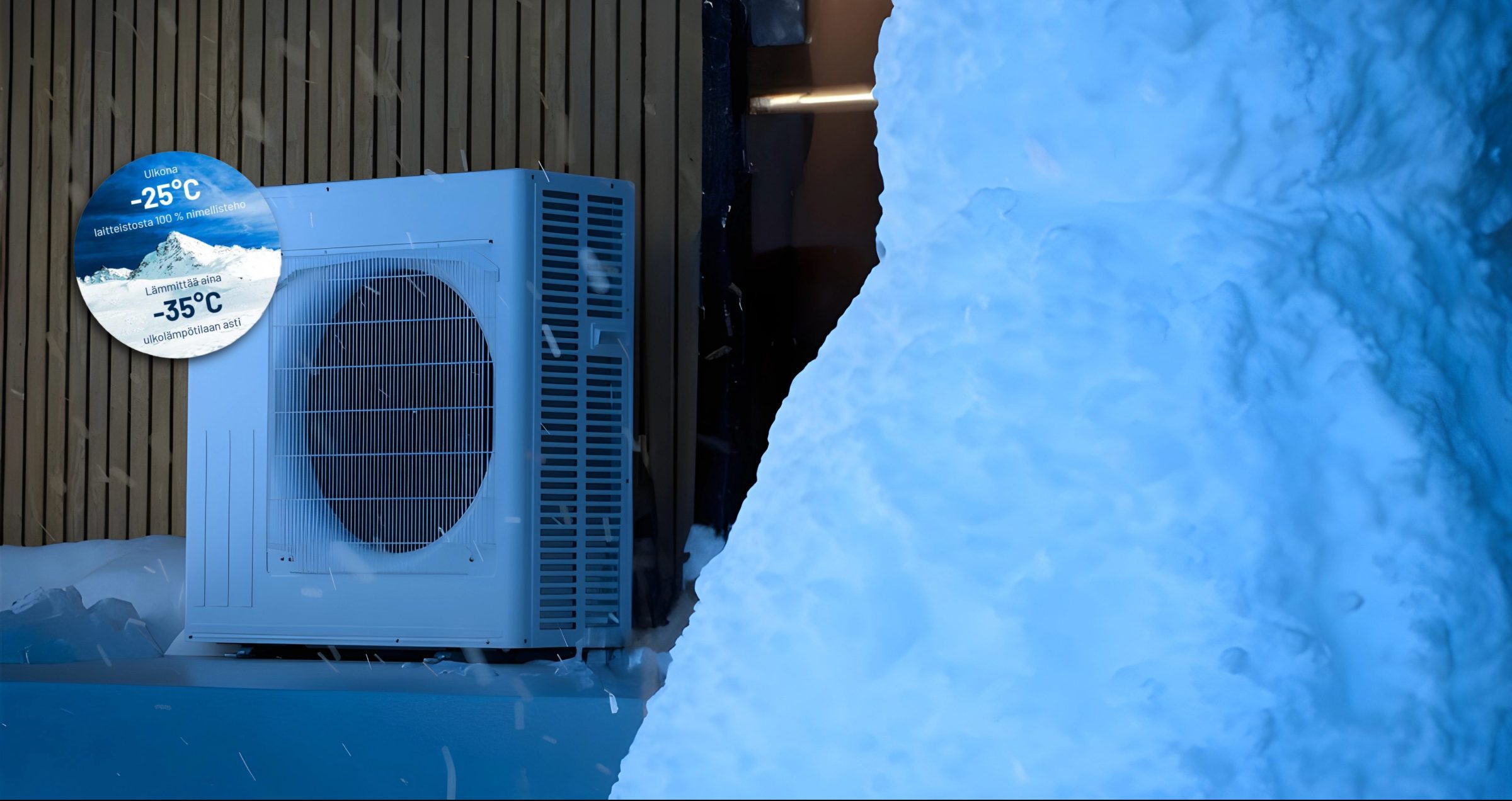
How is the system's operational reliability ensured in severe frosts? All of our complete heating systems (MLP and VILP) are dimensioned and equipped with an appropriate electric resistance, which guarantees heating of the property and hot water supply in all conditions. Geothermal energy is practically almost independent of the outdoor temperature.
What is the technical service life of a heat pump? The compressor of a high-quality ground source heat pump typically has a service life of 20–25 years, and the heat well itself is practically eternal. The technical service life of air-to-water and air-to-air heat pumps is approximately 15–20 years. Regular maintenance significantly extends the life of the equipment.
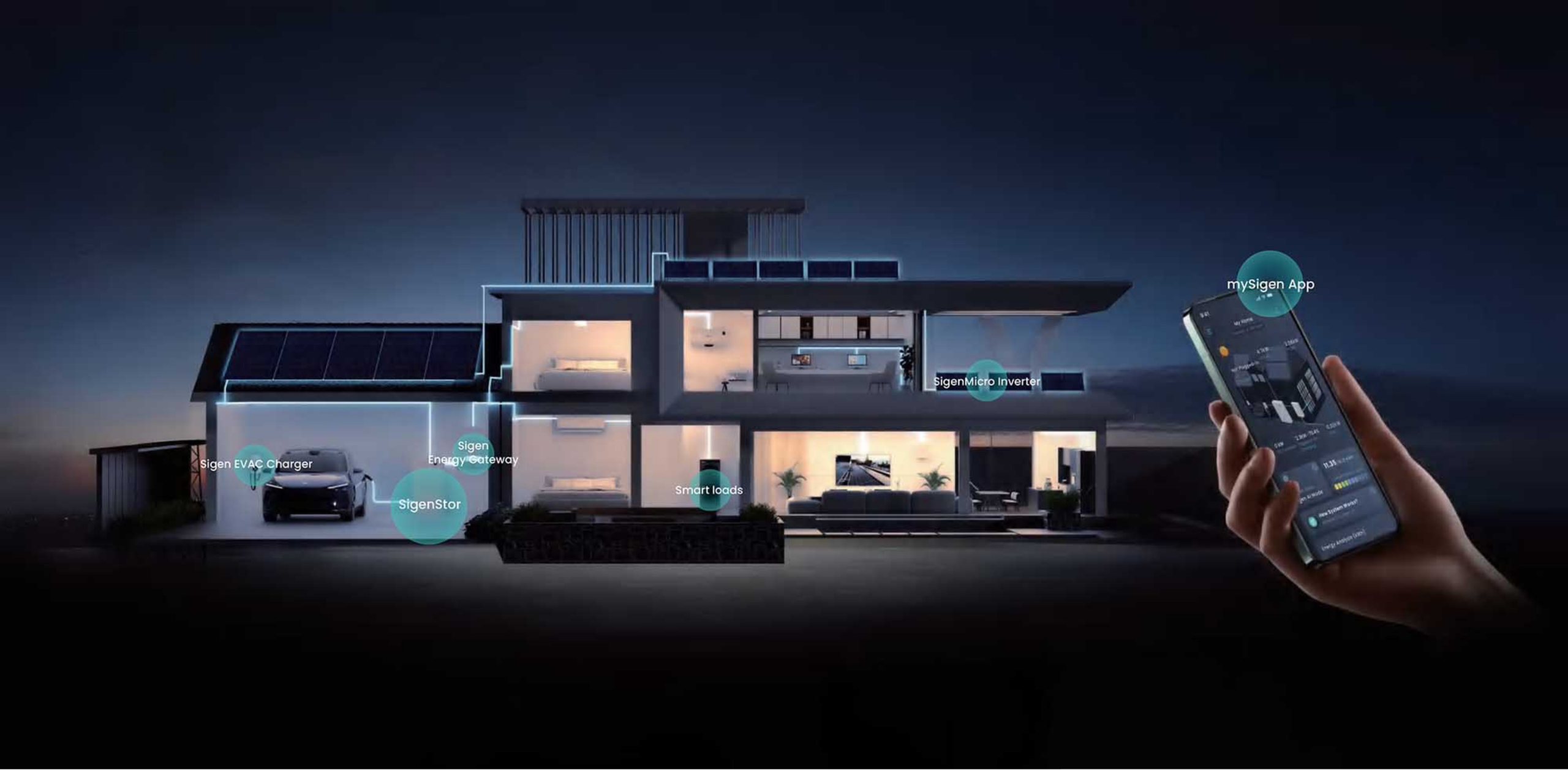
How does integrating a heat pump with solar power work? Heat pump and solar energy are an excellent combination. The free electricity produced by solar panels can cover a significant part of the heat pump and the property's other electricity consumption, maximizing energy self-sufficiency and savings.
Can a heat pump be integrated into an existing building system, such as automation and property management systems? Yes, you can, and modern heat pumps are designed specifically for this. Professional-grade heat pumps offer versatile interfaces (Modbus, BACnet, LON) for building automation. This enables centralized control, remote monitoring, alarm management and optimal adjustment of operating times based on, for example, the spot price of electricity. Integration can even improve the energy efficiency of the entire building when the heat pump communicates with other systems (ventilation, lighting, process equipment). During the design phase, we map the existing automation and ensure seamless integration.
Did you know? The energy produced by heat pumps in Finland is already an incredible 15 TWh/a annually! With this amount of energy, we could use a sauna about 1.5 billion times in total, which means that every Finn could use a sauna almost 300 times in one year.