EN
EN  FI
FI 
LIMITED QUANTITIES, BE HURRY – HEAT PUMPS AT DISCOUNT PRICES!
LIMITED QUANTITIES, BE HURRY – HEAT PUMPS AT DISCOUNT PRICES!
The Finnish vehicle fleet is becoming irreversibly electrified. This technological revolution is not only happening on the roads, but it is also extending its impact deep into the core of real estate. The ability to charge an electric car is quickly changing from an incidental benefit and convenience to a fundamental property feature, the presence or lack of which directly affects its value, attractiveness and usability.
However, building a charging infrastructure is a strategic project that will fail if it is approached as a mere equipment installation. It is not about adding individual sockets, but about the intelligent and controlled expansion of a property's electrical system. A poorly designed system will lead to overloaded electrical connections, unequal cost sharing and expensive repair investments in the future.
The purpose of this article is to provide real estate decision-makers – whether in businesses, housing associations or at home – with a clear and in-depth understanding of the principles of a successful charging infrastructure project. We will discuss charging stations and technology basics, but we focus above all on the strategic choices that guarantee the functionality, cost-efficiency, and scalability of the system for decades to come.
Expert perspective: This guide was written by Mika Aaltonen, Chief Designer of Smart Energy Systems at Renewe. With over 15 years of experience in building electrification and energy efficiency projects, he specializes in designing future-proof charging and energy systems.
Modern real estate is increasingly a service platform for its users, and electric car charging is one of the most anticipated services. Providing it is no longer just a technical upgrade, but rather delivers measurable strategic benefits.
Providing charging facilities for companies is part of a responsible employer image and a concrete way to engage staff. It is also a necessity as companies electrify their own vehicle fleets and a service that attracts customers who drive electric cars. Charging points are already a significant competitive advantage in the business premises market.
In housing companies, charging is one of the most effective ways to maintain and increase the value of shares. In housing transactions, more and more buyers require charging, and its absence can significantly narrow the pool of potential buyers. Well-designed charging infrastructure is an investment that pays for itself not only in terms of convenience, but also in terms of increased property value.
Although there are several charging technologies, charging in buildings and workplaces is almost always based on AC charging (alternating current charging). This means that the charger supplies alternating current from the building's electrical network, which the car's own charger converts to a power suitable for the battery. The most common and recommended power class is 11 kW, or 22 kW depending on the capabilities of the building, which can be used to charge even an empty battery during the night or working day.
More important than the technology of a single device, however, is the intelligence of the entire system. At the heart of this intelligence is dynamic load management.
Imagine a weekday evening in a housing association parking garage: ten residents plug their cars into the charger when they arrive home from work. At the same time, the saunas and stoves in the property are heating up. Without intelligent control, this power spike would inevitably overload the property's electrical connection and blow the main fuse.
Dynamic load management prevents this completely. It is the brain of the system, measuring the total consumption of the property in real time. It recognizes how much power is available for charging and intelligently and equally distributes this power among all cars that are charging. When other consumption in the property decreases, the system automatically increases the charging power. This ensures two things: the property's electrical network is never overloaded, and all cars are charged as efficiently as possible without expensive changes in connection size.
Although the technological principle is the same, the implementation models and priorities vary significantly depending on the usage environment.
Housing company charging infrastructure is a community project that must serve all shareholders equally and in the long term. A successful project begins to build with the decision of the general meeting ready to charge for all parking spaces. This means that cabling and installation space are provided for each space. After this, each member can purchase their own charging device according to their needs without having to dig up the yard. This is the most cost-effective and least disruptive model. Automation of the billing system is also key; a modern system measures each user's consumption and allocates costs automatically, freeing the property manager from manual monitoring work. Check for any up-to-date subsidies Guardfrom the pages of.
Corporate charging solutions often serve three different user groups: staff, customers and the company's own vehicle fleet. The charging opportunity offered to staff is a valued employee benefit that can be implemented with tax subsidies. Customer charging, on the other hand, is an efficient service that improves the customer experience. Charging your own fleet is an operational necessity, emphasizing reliability and scheduled charging control. In all cases, the company needs a management system that can manage user rights, monitor consumption and integrate charging data into other company systems.
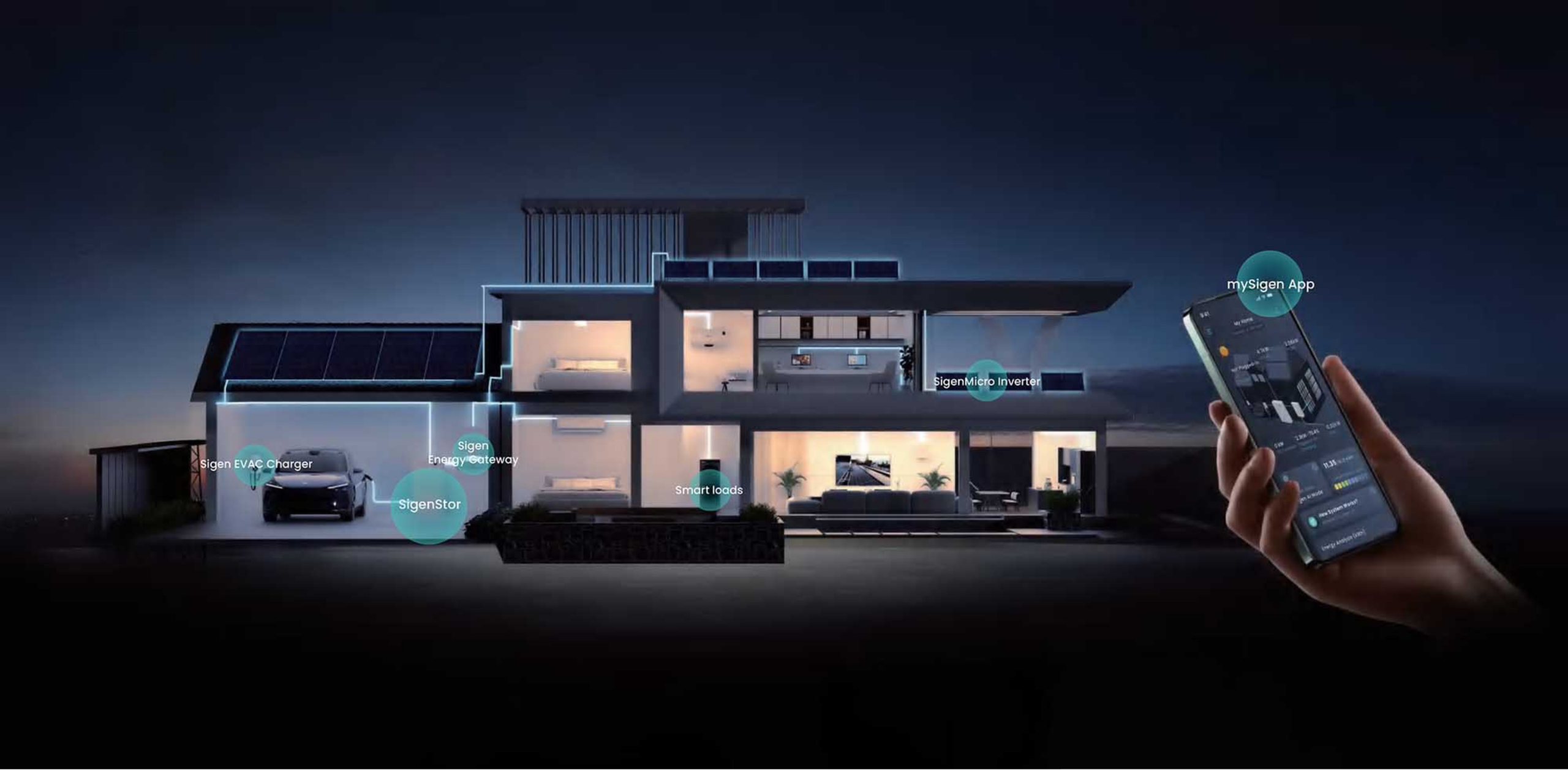
A modern charging system with dynamic load management is the foundation, but its true potential is unlocked when it is integrated into a property's broader energy mix. This not only optimizes costs, but also makes the property more energy self-sufficient and even more valuable.
Electric car charging stations and solar energy are the perfect combination. The system can be optimized to utilize emission-free solar electricity generated on the property's roof, allowing:
In large properties, energy storage (accumulator battery) acts as an intelligent buffer between the charging system and the electrical grid. The battery can:
Although V2G technology is still in its infancy, it is the future of electric mobility. In this vision, electric vehicle batteries not only consume electricity, but can also feed it back into the property or national grid as needed. A property with charging infrastructure and charging stations designed with V2G readiness in mind is not only a consumer, but an active part of the smart grid of the futureTaking this into account today shows true pioneering.
Metering and billing, when charging electricity is billed based on the user's consumption (housing companies, workplaces, customer/guest charging, free car benefit), the energy meter must be MID-approved. Tukes instructs that at AC charging points the meter must meet the requirements of the Measuring Instruments Directive (MID); at public points, in-use verification is carried out every 3 years.
Standards and safety. Design and installation are carried out SFS 6000 -standard series, especially SFS 6000-7-722 (charging of electric vehicles). SESKO's latest charging recommendation (7th edition, 23.5.2025) is supplemented with practical implementation instructions (protections, dimensioning, changes).
Charging obligations; non-residential existing buildings with more than 20 parking spaces in a building or on the same property, must have been equipped with at least one charging point by 31 December 2024. Minimum requirement: >3.7 kW and Type 2 and/or CCS connector. Traficom will monitor the implementation of the obligation from the beginning of 2025.
A professionally planned and managed charging infrastructure project is a clear process that progresses in stages and ensures the quality of the end result.
Charging infrastructure is a long-term investment that needs to be done once and done right. ReneweOur experts will assist you through every step of the project – from thorough mapping and planning to professional installation and maintenance. Are you ready to take the next step towards a smarter energy system?
Book a free survey: 010 660 3030 | info@renewe.fi | Fill out the form online
How long does it take to charge an electric car at 11 kW? A typical 60–80 kWh fully electric car takes about 6–8 hours to charge from almost empty to full. In practice, cars are rarely charged from empty to full, but the energy consumed during the day is recharged during the night.
How does charging infrastructure affect the size and costs of a property's electricity connection? Thanks to dynamic load management, charging infrastructure usually does not require an increase in the size of the electricity connection. The system monitors the total consumption of the property in real time and automatically limits charging to prevent overloading the main fuse. For example, a housing company with a 100A connection can implement charging infrastructure without changing the connection. Only in exceptionally large projects or in old properties where the current connection is undersized, may the network company need to increase the connection. This can cost 5,000–20,000 euros, depending on the need for increased power and the distance from the transformer station.
What does “charging readiness” mean and cost in a housing association? Charging readiness means implementing cabling, conduits and expansions to the center for each parking space without installing the charging device itself. This is the largest cost item in the project, but doing it for all spaces at once saves significantly compared to individual installations, the cost depends entirely on the site and needs.
How much does it cost to build charging infrastructure in a housing association? Costs vary significantly depending on the site. Building a charging facility (cabling, central extensions, protective piping) typically costs 1,500–3,500 euros per parking space, depending on the distance from the main center and the extent of excavation work. The dynamic load management system of the charging station increases costs by approximately 5,000–15,000 euros, depending on the number of parking spaces. The charging devices themselves cost 500–2,000 euros per unit when installed. The total cost in a housing association with 20 parking spaces is typically 40,000–60,000 euros. Housing associations can utilize the household deduction for the installation work, which significantly reduces costs.
Can the charging system be connected to solar panels? Yes, and it is highly recommended. The smart charging system can be programmed to take advantage of solar panels overproduction, whereby cars are charged with free and emission-free solar energy.